Comprehensive Care Tailored to You
At UnLock Physical Therapy, we understand that every injury and recovery journey is unique. Our approach is rooted in personalized care and evidence-based techniques designed to meet your specific needs. Our treatments emphasize not only recovery but also long-term health and prevention.
- E Assessment and Diagnosis
- E Customized Treatment Plans
- E Progressive Rehabilitation
- E Education and Prevention
- E Cutting-Edge Technology, including LightForce Laser Therapy
- E Dry Needling
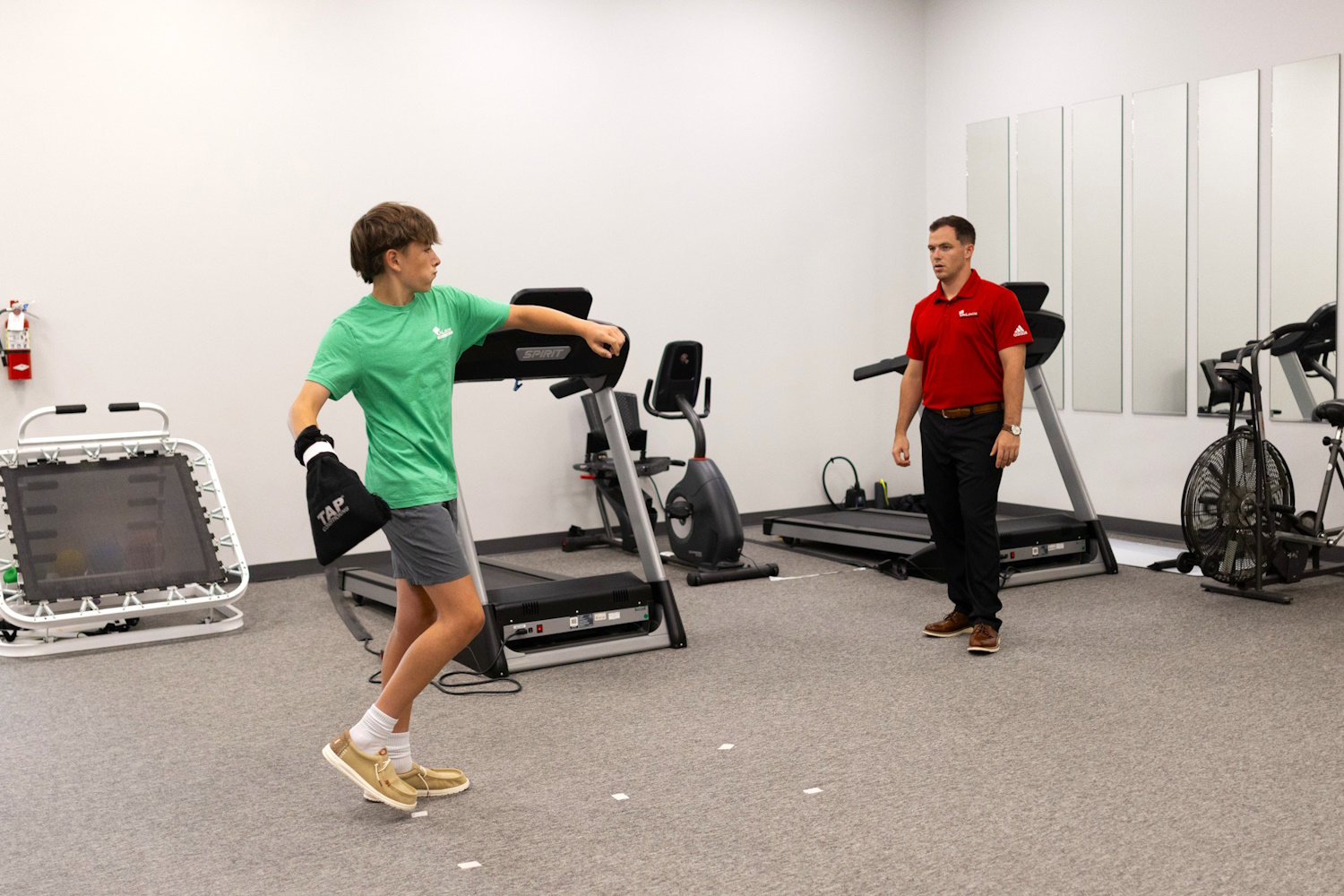
We empower you with knowledge about your body and condition. Our therapists provide guidance on exercises and lifestyle changes to support your long-term wellness
What We Treat
Revitalize your journey to recovery with UnLock Physical Therapy, where we blend advanced techniques and personalized care to treat and heal injuries eectively

Shoulders
Expert shoulder injury treatment at UnLock Physical Therapy—where healing begins with precision care.

Elbows
Experience advanced elbow treatment where we focus on restoring function and alleviating pain with cutting-edge techniques

Back
Find relief and regain mobility with our comprehensive back treatment programs at UnLock Physical Therapy, tailored to combat pain and enhance your spine health.
Treatment & Therapy Modalities
Manual Therapy
Definition & Purpose:
- Manual therapy is a hands-on treatment approach used by physical therapists to manipulate joints and soft tissues. Its goals include reducing swelling, loosening restrictions, mobilizing joints, breaking up adhesions, and improving range of motion.
Common Techniques Used:
- Manual Traction — gently stretching parts of the body (often the neck, sometimes arms, back) to open joint spaces and relieve compression.
- Massage (Therapeutic / Deep Tissue) — not spa style but targeted to soften tissues, break up scar adhesions or restrictions, and improve mobility.
- Joint Mobilization / Manipulation — applying low-velocity pressure to loosen restricted joints, restore motion, and reduce barriers in movement.
- Lymphatic Drainage — using light manual pressure to encourage fluid movement and reduce swelling (especially post-surgically), often paired with compression.
Safety & Benefits:
- Manual therapy is non-invasive, generally safe, and avoids relying on medications.Therapists are trained to work within the physical limits of the patient’s body, and many patients report feeling benefits even after a single session.
Therapeutic Exercise
What is “Therapeutic Exercise”:
- Range of Motion (ROM): Exercises (active, passive, or assisted) aimed at helping joints and soft tissues move more freely and regain full, pain-free mobility.
- Muscle Performance: Focus on building strength, endurance, and power via resistance, endurance challenges, etc. Important for stability, balance, and joint support.
- Posture: Exercises to correct and support better posture, not just while exercising, but in daily life, to reduce strain, prevent injury, and help the body function more efficiently.
- Balance & Coordination: Exercises to retrain or maintain one’s ability to stand, move, and coordinate limbs. Critical especially after injury or illness, since balance and coordination losses can affect independence in daily tasks.
- Relaxation / Soft Tissue / Pain Relief: Although you wouldn’t always label this “exercise,” they include techniques (like heat, cold, massage, electrical stimulation, trigger point therapy) to help tissues relax, reduce pain, and facilitate better movement.
- Area-Specific / Systemic Exercises: Some exercises address not just muscles and joints, but other systems,like breathing or circulation, to support overall healing and reduce stress on the body.
How It Helps with Pain & Recovery:
- A common paradox: when people are in pain, rest and medication are natural instincts, but over time, rest weakens supportive muscles, reducing function and potentially worsening pain.
- A physical therapist can assess a person’s functional status (e.g. strength, motion, how they perform daily tasks) and design a customized exercise plan to:
- Strengthen weak or underused muscles
- Restore motion to restricted joints
- Improve endurance
- Reduce compensatory movement patterns that worsen pain or cause additional strain
- Ultimately reduce pain and improve how well the body functions in daily life, sometimes even better than before the injury.
Trigger Point Therapy
What Trigger Point Therapy Is
- Also known as myofascial release or pressure point massage, trigger point therapy involves applying firm (but controlled) pressure by a therapist (or occasionally with tools) to trigger points in muscles/fascia.
- Trigger points are those “knots” or tender spots in soft tissue (muscles, fascia) that feel tight, stiff, or dense.
- The goal is to release tension and adhesions in the fascia and surrounding tissues, restore normal motion, relieve pain, and reduce further tissue damage.
How / Why Trigger Points Develop
- Fascia (the connective tissue enveloping muscles, tendons, ligaments, bones, nerves) is normally flexible and gliding. But under stress (injury, repetitive motion, poor posture, dehydration, poor nutrition), it can stiffen, lose mobility, and develop adhesions.
- When fascia tightens or becomes immobile, it constrains underlying tissues, reduces movement, and can lead to increased pain or risk of injury.
- Trigger point pain may also be referred (meaning a trigger point in one area may cause pain somewhere else) due to how the affected muscle or fascia interacts with surrounding structures.
Conditions That Can Benefit
- Sciatica
- Carpal tunnel syndrome
- Medial / lateral epicondylitis (“golfer’s elbow” / “tennis elbow”)
- Whiplash
- Osteoarthritis
- Adhesive capsulitis (frozen shoulder)
- Headaches & migraines
- Neck pain & back pain
- Thoracic outlet syndrome
- Temporomandibular joint (TMJ) disorder
Joint Mobilization
Definition & Purpose
- Joint mobilization is a type of manual therapy in which a physical therapist passively moves a joint in a specific direction, magnitude, and rhythm to improve its function.
- The technique can be administered by hand or using tools or straps, depending on the joint and goal.
- The intended outcomes include:
- Pain reduction
- Improved range of motion
- Better joint mechanics / quality of movement (arthrokinematics)
Conditions That May Benefit
- Joints sometimes lose mobility or become painful due to injury, repetitive stress, poor posture, degenerative (age-related) changes, swelling, or misalignment.
- Joint mobilization is used (when appropriate) for conditions such as:
- Arthritis (shoulder, spine, elbow, hip, knee)
- Rotator cuff tears / sprains
- Adhesive capsulitis (frozen shoulder)
- Tennis elbow / golfer’s elbow (epicondylitis)
- Ankle sprains
- Sciatica / nerve impingement syndromes
- Spinal joint “locking,” whiplash, facet joint dysfunctions
Kinesio Taping
What Kinesio Taping Is & How It Works
- Kinesio tape is an elastic therapeutic tape that supports joints and muscles while still allowing motion
- Its adhesive is activated by body heat and is designed to stay in place for a full day (or longer), even through sweating and movement.
- The tape lifts the skin slightly, which can help facilitate better circulation of blood and lymph around the taped area. This in turn may reduce swelling, improve healing, and relieve pain.
- Proper application is important: direction, shape (I, Y, X), and tension all matter for specific muscles or joints.
Uses & Conditions Treated
- While very popular among athletes (runners, CrossFit, etc.), kinesio taping is also used for everyday pains like wrist strain (e.g. from typing) or back discomfort from posture stress.
- Common conditions treated with kinesio taping include:
- Back sprains & strains
- Neck aches
- Shoulder injuries
- Knee pain
- Sports injuries generally
- Also used during pregnancy (for back, knees, abdominal support) with proper guidance
Benefits & Considerations
- The tape offers support without restricting motion, letting people stay active while getting relief.
- By gently lifting the skin, it can improve fluid flow (blood, lymph), which may help reduce swelling and speed recovery.
- It may help guide or encourage proper muscle alignment or activation patterns, helping with injury recovery or prevention.
- It’s a single-use tool: once applied (cut to shape), it’s intended to last a day (or more) and then be removed.
Electrical Stimulation
What It Is
- Electrical stimulation (e-stim) is a modality in which self-adhesive electrodes are placed around a target area, and a device delivers controlled electrical currents through the wires into the tissues.
- Depending on the mode, these currents interact with sensory and/or motor nerves.
- There are multiple modes/types: TENS, interferential, Russian, pre-modulated, symmetrical or asymmetrical biphasic, etc. The therapist chooses the appropriate mode for each patient’s needs.
Uses & Benefits
- Reducing, controlling, or eliminating pain (acute and chronic)
- Increasing local circulation to promote healing
- Decreasing swelling / edema
- Improving range of motion in stiff tissues or joints
- Reducing muscle spasm
- Providing biofeedback (helping awareness of muscle activation)
- Supporting neuromuscular re-education (helping muscles relearn proper control)
- Preventing or reversing muscle atrophy, especially after immobilization
- Pain control is a frequent indication. The modality can stimulate specific sensory nerve fibers (e.g. A-beta, A-delta, C fibers), interrupting pain signals and helping release endogenous pain-relieving neurotransmitters.
IASTM Technique
What Is IASTM / Graston Technique
- IASTM stands for Instrument Assisted Soft Tissue Mobilization. It is a manual therapy method that uses specialized ergonomic tools (often stainless steel) to perform soft tissue work (massage, scraping) over the skin.
- The Graston technique is specifically mentioned as a well-known form of IASTM.
- It’s used to address soft tissue injuries of connective tissues, muscles, neurological tissues, and skin.
Conditions & Applications
- IASTM can help treat a variety of conditions including:
- Repetitive stress injuries
- Strains and sprains
- Subluxations (partial joint misalignments)
- Specific examples include quadricep pain, rotator cuff issues, carpal tunnel syndrome, lower back pain, plantar fasciitis, tennis elbow, and even headaches.
Dry Needling
What Dry Needling Is & How It Works
- Dry needling is a technique in which a sterile, thin filament needle is inserted through the skin into muscles, tendons, ligaments, or near nerves.
- It is not acupuncture. Dry needling is grounded in Western medicine, anatomy, and neuromuscular science—not traditional acupuncture theory.
- The goal is to immediately reduce pain, decrease muscle tension, and improve mobility.
- It is used in conjunction with other physical therapy treatments and manual techniques for a synergistic effect.
Conditions & Applications
- Acute or chronic injuries
- Headaches
- Neck pain, back pain
- Tendinitis and muscle strains
- Muscle spasms
- Sciatica
- Hip or knee pain
- Fibromyalgia
- Tennis or golfer’s elbow
- Overuse injuries
Lightforce Class IV Laser Therapy
What It Is & Purpose
- LightForce Class IV laser therapy is presented as a safe, non-invasive therapy that uses photons (light energy) to promote healing, relieve pain, and increase circulation in injured tissue.
- The treatment is described as pain-free, with most patients feeling only a gentle warmth during application.
- Treatments are relatively quick (2–10 minutes) and often show results after just a few sessions.
What to Know / Safety
- Laser therapy does not hurt and is FDA-approved, adhering to rigorous ISO standards.
- Treatments are applied directly to the skin, taking care to avoid direct exposure to the eyes.
What to Know / Safety
- Laser therapy can be used for both acute and chronic conditions.
- Some of the conditions mentioned include:
- Neck, back, and shoulder pain / sciatica
- Arthritis, bursitis, disc injuries
- TMJ dysfunction
- Sports injuries, plantar fasciitis, carpal tunnel syndrome
- Soft tissue damage, migraines, and more
Deep Muscle Stimulation
How It Works
- DMS employs percussion and mechanical vibrations to penetrate deep muscle tissue, stimulate muscular metabolism, and accelerate the lactic acid (metabolic) cycle to reduce pain.
- The therapy concentrates on areas with muscular spasm or tension and uses short bursts of deep, rapid percussion to help “break up” the pain response.
Conditions & Uses
- Plantar fasciitis
- Bursitis
- Arthritis
- Lower back strains
- Sports injuries
- Sciatica
- Carpal tunnel syndrome
- Muscle strains & sprains
- Soft tissue damage
Cupping
What Cupping Is & Its Background
- Cupping is an ancient healing method (used in Middle Eastern, Chinese, Egyptian cultures) where cups are placed on skin to create suction.
- There are different techniques: traditional (fire-cup), vacuum / pump suction, or silicone cups (for a “massage” effect)
- In modern therapy, physical therapists use cupping as a tissue distraction release technique — cups are glided over skin to separate or lift tissue interfaces (skin, fascia, muscle, tendons)
Claimed Benefits & Applications
- Release of adhesions / scar tissue
- Relaxation of muscles / tension
- Trigger point relief
- Increased local circulation
- Improved lymphatic drainage / fluid movement
- Enhanced blood flow / hydration of tissues
- It is sometimes effective even after a single session for myofascial pain.
- Some research or clinical reports suggest benefits for chronic neck pain, low back pain, fibromyalgia
Compression Cold Therapy
Core Concept & Purpose
- Compression Cold Therapy (also called cold compression or cold + compression wrap) enhances the standard ice treatment by adding intermittent / sequential pressure (compression) along with cold.
- The wrap is specifically designed for the body part being treated, so swelling is directed away and cold penetrates deeper into tissues.
- It’s positioned as a more powerful version of “ice pack” therapy: combining pressure + cold helps reduce inflammation and pain more effectively, while improving circulation to promote healing.
How It Works & Benefits
- Mechanism
- The wrap applies directional, sequential compression to push fluid away from the injured area (helping with swelling).
- The cold component helps slow metabolic activity, reduce inflammation, and numb pain.
- Together, they drive cold deeper into tissues and help flush metabolic waste (like lactic acid) from muscles.
- Applications
- Useful in pinpoint injuries: tendonitis, muscle strains, small tears, aches, pain in joints or muscles.
- Often used as part of recovery for athletes, because it helps speed recovery, reduce soreness, and push out waste products
- from the tissues.
Cervical & Lumbar Mechanical Traction
What It Is & Purpose
- Traction is a type of spinal decompression / decompressive therapy offered by Unlock PT. It is intended to relieve pressure on the spine by gently stretching the vertebrae, spinal joints, muscles, and soft tissues.
- The therapy helps relieve pain from joints, sprains, muscle spasms, and also targets conditions like herniated discs, sciatica, degenerative disc disease, and pinched nerves.
How It Works & Methods
- Traction can be done mechanically (with devices) or manually (therapist uses hands).
- For cervical (neck) traction, a gentle force is applied to pull or stretch the head away from the neck, thereby decompressing cervical vertebrae.
- For lumbar (lower back) traction, the pelvis is gently pulled/“gapped” away from the lower back to create space between lumbar vertebrae.
- The therapist will design a personalized plan considering the patient’s specific condition, spinal level involved, and tolerance.
Benefits & Indications
- The intended benefits include:
- Relief of spinal pressure / decompression
- Alleviation of pain, especially when nerve roots are compressed
- Reduction of muscle spasms
- Improvement in joint mechanics and mobility
- Conditions particularly mentioned: herniated discs, sciatica, degenerative disc disease, pinched nerves.
Chronic pain in the spine can impact your daily activities and quality of life. Our therapists use targeted exercises, manual therapy, and postural training to alleviate discomfort and improve spinal health, helping you achieve long-term relief.
[/dsm_card]